

You have heard the pitch. Every EOR provider, every India consultant, every LinkedIn post from someone who just returned from Bengaluru tells you the same thing: hire in India, save 70%, ship twice as fast.
You are sceptical. And you should be. Maybe you tried it once and it was messy. Maybe you know a founder — in your city, in your Slack community, in your investor’s portfolio — who tried it and it was messy. Maybe you just don’t believe numbers that sound too good to be true.
Here is what makes the question harder in 2026: it is not just US founders asking it any more. Canadian SaaS companies facing a 250,000 tech worker shortfall are asking it. Australian fintechs looking at AUD 210,000+ per engineer in Sydney are asking it. The same pitch is being made to all three markets. The scepticism is the same. And the answer — honest this time, not the sales version — applies to all three.
This blog is not the pitch. It is the honest answer — including what the sceptics get right, what the data actually shows, and the one thing that separates every founder who says ‘India didn’t work for us’ from every founder who says it changed their company.
First: What the Sceptics Get Right
Not every India hiring experience is a success. The failure stories are real — and they cluster around the same pattern regardless of which market the founder is in. Before we get to the data, let’s be honest about what goes wrong.
What You Hear | What Sceptics Point To | What Actually Happened |
|---|---|---|
"The quality wasn't there" | One bad offshore experience with a vendor or agency. | Vendor agencies vs. direct EOR hires are fundamentally different. An agency marks up a contractor. An EOR employs a full-time engineer who reports to you, owns a roadmap, and is evaluated on your OKRs — not the agency's utilisation rate. |
"The timezone was too hard" | Tried to run synchronous standups at a 10.5-hour difference. | The relay model requires deliberate architecture, not synchronous meetings. Teams that architect around the time difference report 30–40% faster cycles. Teams that tried to replicate their existing standup culture report frustration. |
"It didn't feel like our team" | Treated India engineers as a remote execution layer, not core team. | Founders who invest in onboarding, equity, health insurance, and L&D report 13–15% attrition. Those who treat it as a vendor relationship report 22–28% — and the engineers they lose go to GCCs or better-resourced competitors. |
Every failure story points to the same root cause regardless of whether the founder was in San Francisco, Toronto, or Sydney: they treated India as a vendor relationship, not an employment relationship. The moment you start — the contract structure, the benefits package, the onboarding investment, the equity conversation — determines the outcome 14 months later.
What the Data Actually Shows
Set aside the pitch decks. Here is what the evidence says about India’s engineering talent market in 2026 — with sources founders can verify.
On talent quality
India ranks first globally in AI skill penetration among all OECD and G20 countries, according to the Stanford AI Index 2025. Indian professionals show a 96% adoption rate of AI and generative AI tools at work. The country accounts for 16% of the world’s AI talent pool, growing at 33% year-over-year. LinkedIn India data shows that job postings requiring LangChain, CrewAI, or AI agent skills grew by over 300% between January 2025 and March 2026.
The engineers producing these numbers are not cheap generalists. They are the same engineers that Google, Microsoft, Amazon, and Meta collectively added 32,000 of in India during 2025, representing 18% year-over-year growth. They are the engineers building India’s 112+ unicorns. India has the third-largest startup ecosystem globally — these engineers are product thinkers who have operated in resource-constrained, high-velocity environments that most engineers in expensive Western markets have never experienced.
On attrition
India’s overall attrition fell to 13.6% in 2026, according to Aon’s India Salary Report. US tech attrition runs 20–25%. Canadian IT sector attrition runs 18–22%. Australian tech sector attrition sits at 16–20%. The engineers you are most likely to lose are the ones in your home market, not in Bengaluru.
Lower attrition compounds over time. The institutional knowledge that makes a mid-senior engineer 3x more productive than a new hire is retained rather than walking out the door. For startups building in a narrow technical domain — AI infrastructure, fintech compliance, developer tooling — that continuity is not a nice-to-have. It is the moat.
On cost — three markets
A mid-senior software engineer in San Francisco costs $220,000–$280,000 fully loaded. In Toronto, the same calibre hire runs approximately $140,000–$165,000 USD. In Sydney, approximately $145,000–$165,000 USD. The same engineer in Bengaluru via EOR: $55,000–$75,000. Five India hires cost what one US hire costs. Three cost what one Canadian or Australian hire costs.
These are not estimates — they are cited figures from Omnivoo’s India Cost Guide 2026, Robert Half Canada 2026 Salary Guide, and CloudColleague AU 2026. The cost difference is structural, permanent, and available to any founder in any of the three markets today.
Six Myths — Busted With Sources
Here are the six objections most founders raise — from all three markets — with what the data says and where the objection actually comes from.
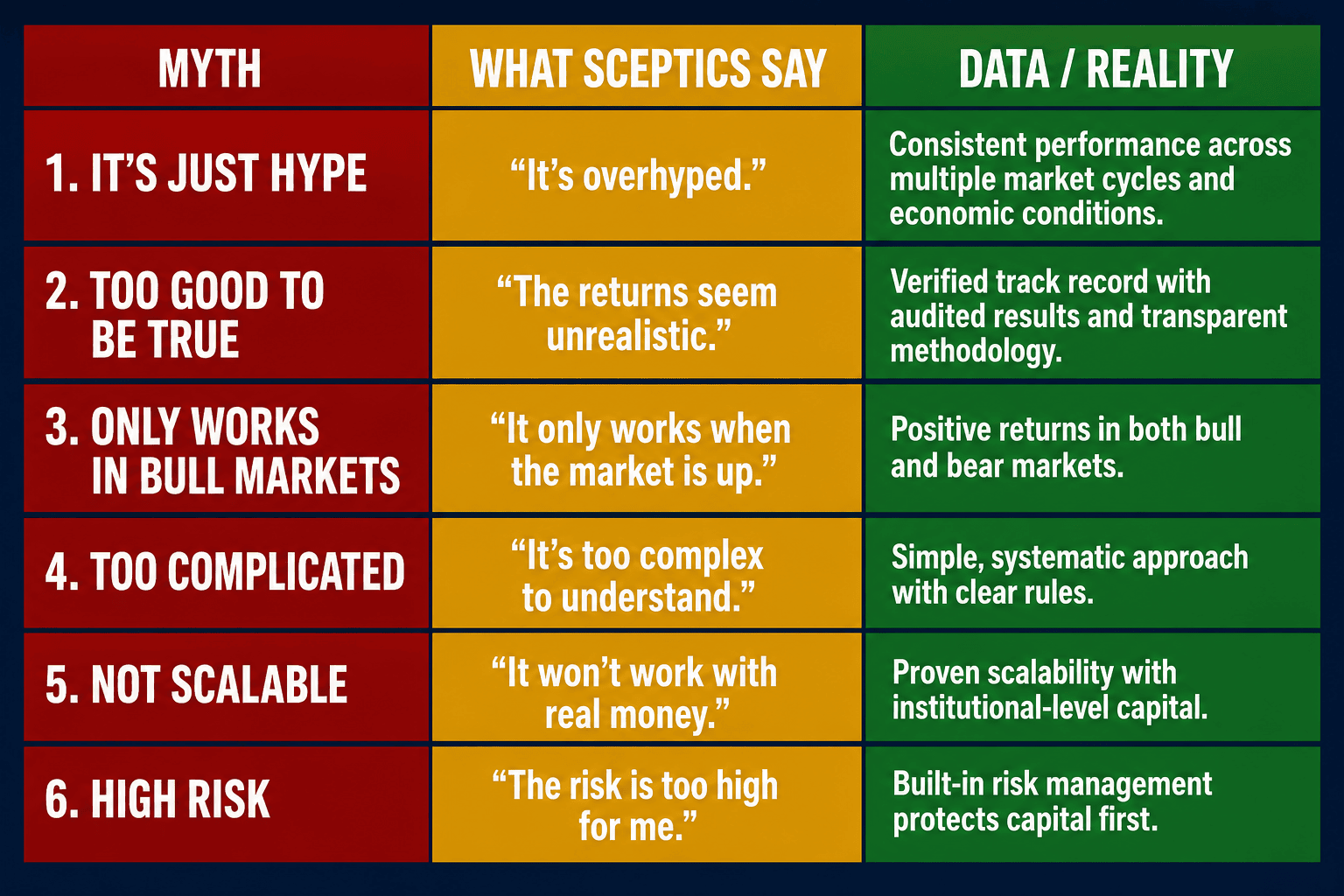
The Myth | What Sceptics Say | What the Data Shows |
|---|---|---|
"It's just cheap outsourcing" | You get what you pay for. India engineers are cheaper because they are junior or generalist. | India ranks #1 globally in AI skill penetration (Stanford AI Index 2025). Over 126,600 AI professionals work in Indian GCCs alone. Google, Microsoft, and Amazon added 32,000 jobs in India in 2025. These are not generalists. |
"The timezone kills it" | You will never get anything done working 10.5 hours apart. | US founders who architect deliberately around the time difference report 30–40% faster iteration — code reviewed before the morning standup. Australian founders with 4.5 hours of live overlap run real standups daily. |
"Communication is a nightmare" | Language barriers, miscommunication, cultural friction. | India is the world's second-largest English-speaking population. Most engineers have collaborated in English on global open-source projects since college. |
"You'll face constant attrition" | Indian engineers job-hop constantly. You will rebuild the team every year. | India's overall attrition fell to 13.6% in 2026 (Aon). US tech attrition runs 20–25%. Canadian and Australian IT sectors run 18–22%. You are more likely to lose your home-market engineers. |
"The compliance is too complex" | Indian labour law is impenetrable for a foreign startup. | It is complex — but that is exactly what a specialist EOR handles. PF, ESI, TDS, Gratuity, Labour Codes 2026 — managed by StratEdge Global across all 28 states. |
"It is only good for junior roles" | India is fine for outsourcing support work, not core product engineering. | 72% of Indian employers report difficulty filling AI, cloud, and data roles — demand is outpacing supply from GCCs and unicorns. These are senior, specialised engineers competing for the same candidates. |
What Changes for Canadian and Australian Founders
The core argument — India is worth it if you build an employment relationship, not a vendor relationship — applies equally to all three markets. But there are nuances specific to Canadian and Australian founders that the standard India EOR pitch never covers.
🇨🇦 | If you are a Canadian company Your domestic hiring crisis is more acute than the US. Canada faces a 250,000 tech worker shortfall with tech unemployment at 3.3% — you are competing for workers who already have jobs. The Temporary Foreign Worker pathway for tech roles takes 8–16 months, which means India EOR is not an alternative for Canadian startups — it is often the only viable option for filling cloud, QA, and AI roles in a reasonable timeline. The compliance structure for Canadian companies is governed by the India-Canada DTAA (Double Taxation Avoidance Agreement), which has been active and well-tested. What Canadian companies need to watch: state-level Professional Tax obligations and Shops & Establishments registration variances across Karnataka, Maharashtra, and Delhi NCR — gaps that standard global EOR platforms frequently miss. Canadian companies also benefit from a meaningful timezone setup: Toronto is 9.5–10.5 hours behind India depending on daylight saving cycles, which means a functional relay model with a 30–60 minute live overlap window in the morning if needed. |
🇦🇺 | If you are an Australian company Australia’s driver is cost, not scarcity — and the cost cliff is steeper than almost any other market. A single senior engineer in Sydney costs AUD 210,000+ fully loaded. A team of five mid-to-senior engineers from Bengaluru or Hyderabad costs AUD 52,000–68,000 each. The saving on a team of five typically runs AUD 600,000–800,000 annually — a P&L transformation, not a marginal saving. The structural advantage most Australian founders do not know about: India Standard Time sits only 4.5 hours ahead of Sydney. That means the India team’s afternoon (2pm–6pm IST) overlaps with Sydney’s morning (9am–1pm AEST). Australian companies are running real standups, live code reviews, and sprint ceremonies in real time. This is not possible for US or Canadian companies without antisocial hours. For Australian companies specifically: the Australian Privacy Act has extraterritorial provisions that interact with India’s DPDP Act 2023. Standard EOR contracts from European-template providers typically have not addressed this interaction. StratEdge Global‘s employment contracts are structured to satisfy both frameworks simultaneously. |
The One Thing That Separates Winners From the Burned
Every founder who has had a bad India experience and every founder who has had a transformative one started from the same place: they found engineers in Bengaluru, they paid them, they got work back.
The difference is what happened in the first 90 days.
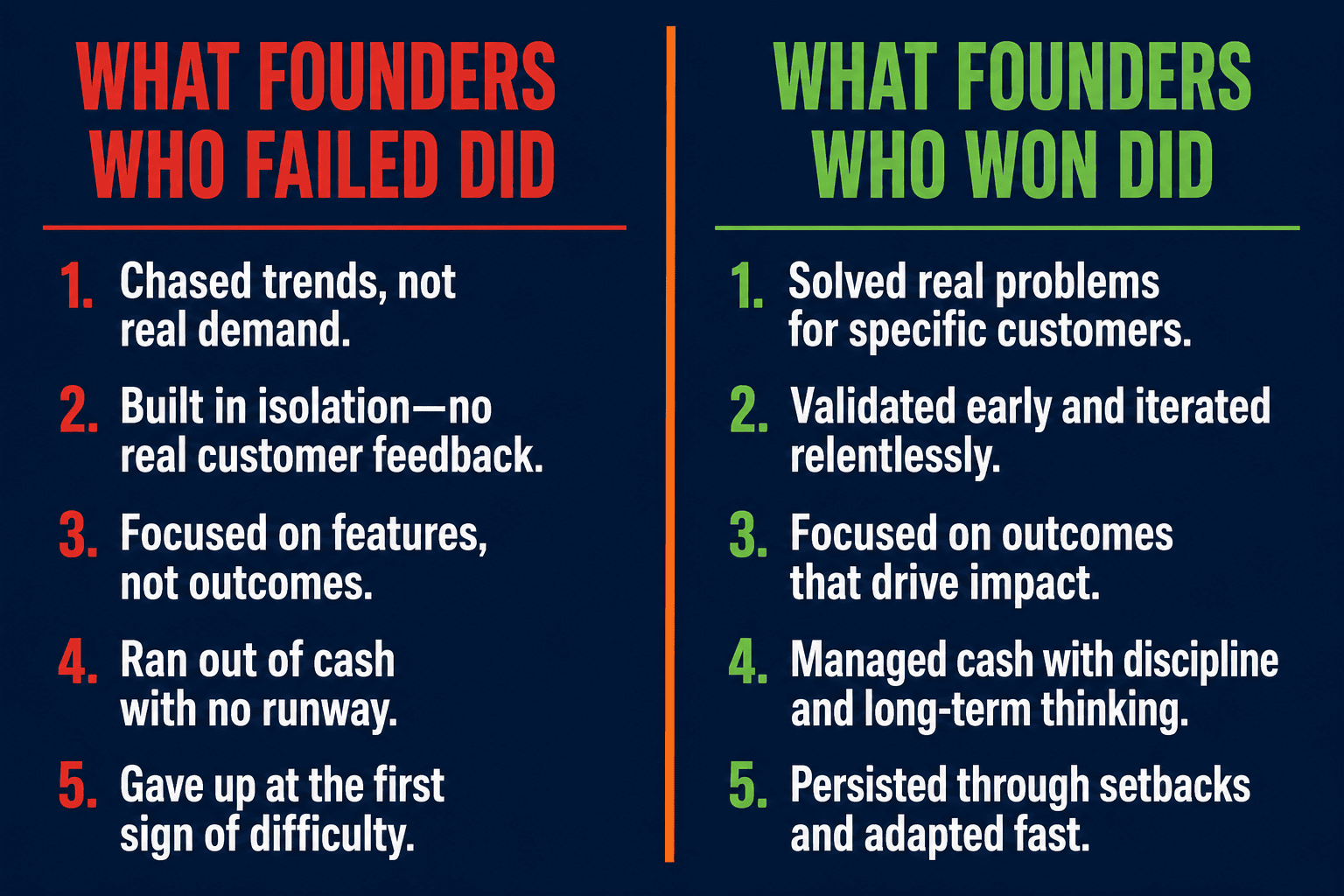
Founders who failed — the pattern is identical across all three markets:
- Hired as contractors to skip compliance setup
- Offered only statutory minimum — no group health insurance, no equity conversation
- Treated the India team as a remote execution layer — tickets in, code out
- Never invested in async communication norms or proper onboarding
- Did not run compensation reviews aligned to India’s 9.1% average salary increase projections (Aon 2026)
Founders who won — also identical across all three markets:
- Used a compliant EOR from day one — no misclassification exposure, no diligence surprises
- Offered group health insurance including dependents from the first offer letter
- Had an equity conversation in the first 30 days — ESOPs or phantom equity with clear vesting terms
- Treated the India team as core product team — same sprint, same roadmap, same OKRs
- Invested in async communication norms — written specs, clear acceptance criteria, documented architecture decisions
The data confirms it: companies delivering statutory-only benefits in India report engineering attrition of 22–28% annually — higher than the Indian IT sector average, because their engineers are being continuously recruited by GCCs and better-resourced competitors who offer the full package. Companies that add group health, L&D, and equity report 13–15% attrition — matching the Indian IT sector benchmark and outperforming their domestic US, Canadian, and Australian equivalents.
The quality of your India team is almost entirely a function of the quality of the employment relationship you build. Not the city. Not the roles. Not the EOR provider. You.
Is It Worth It? The Honest Verdict
For a Seed or Series A startup that is engineering-heavy — in the US, Canada, or Australia — the answer is yes. But only if you approach it as an employment relationship, not a vendor relationship.
If you are willing to offer compliant full-time employment with real benefits, include your India team in your product roadmap, invest in async communication norms, and use an India-specialist EOR rather than a contractor agreement or a European-template global platform — the returns are real. The cost differential adds 12–18 months of runway. The talent quality at the senior level is globally competitive. The attrition rate beats your home market. And in 2026, three markets are competing for the same engineers — which means the window to move first is not permanent.
If you are not willing to do those things — if you want to pay contractors monthly, offer no benefits, and treat the India team as a remote execution layer — the sceptics are right. It will not work. Not because India is a bad talent market. Because what you are building is not a team.
The short answer:
India is worth it if you treat your India team like your US, Canadian, or Australian team — same rigour, same investment, same equity conversation. It is not worth it if you treat it as a cost-cutting exercise. That is not a statement about India. That is a statement about what a team actually is.
Getting It Right: The Model That Works
The structural choice that determines everything else is the hiring model. Contractor arrangements create misclassification liability — $25,000–$40,000 per person — that surfaces in every Series A, Series B, and M&A diligence process for US, Canadian, and Australian parent companies alike. Generic global EOR platforms apply European compliance templates to Indian employment structures, creating gaps that become visible at funding due diligence.
An India-specialist EOR like StratEdge Global handles all 28 states and 8 Union Territories with Labour Codes 2026 compliance built in from day one. For Canadian companies, it covers state-level Professional Tax and Shops & Establishments registration variances. For Australian companies, it satisfies both the Australian Privacy Act and India’s DPDP Act 2023 simultaneously. And across all three markets, it delivers the employee experience stack — group health insurance, engagement programmes, onboarding — that determines whether your India team stays or leaves.
- 48-hour onboarding SLA: Not 2–6 weeks. Your candidate has competing offers from a GCC, an Indian unicorn, and now a Canadian or Australian company. Speed is the offer.
- Full Labour Codes 2026 compliance: All 28 states, state-specific Professional Tax, Basic+DA wage mandate (November 2025). Not a European template.
- Employee experience: Group health insurance including dependents, ESOPs, L&D budget administration — the benefits that actually retain senior engineers at the 14-month mark.
- Risk clearance: Contractor-to-employee conversion in 5 business days — clear misclassification exposure before it surfaces in diligence.
- Transparent startup pricing: From $349/month. No lock-in. No enterprise procurement cycles. One USD invoice.

The Bottom Line
Is hiring in India worth it? For a US startup, a Canadian SaaS company, or an Australian fintech — yes, with conditions.
The conditions are not about India. They are about how you build a team. Full-time employment, real benefits, equity conversations, async communication norms, a compliant India-specialist EOR from day one. Do those things and the cost savings, talent quality, and retention metrics are everything the pitch decks say they are — and the numbers extend your runway by 12–18 months as a structural side effect.
Do not do those things and the sceptics are right.
The founders who have changed their companies through India hiring did not do something magical. They treated their India team the same way they treated their home-market team. The EOR handled the compliance. StratEdge Global handled the benefits. The founders handled the relationship. That is the entire playbook — and it is available to you in 48 hours.
About StratEdge Global
StratEdge Global is a global EOR and workforce company built for ambitious companies around the world. Our platform onboards India employees in 48 hours with full PF/ESI/TDS compliance, Labour Codes 2026 alignment, and transparent startup pricing — no lock-in.
📍 HQ: Sheridan, WY (USA) · Bengaluru, India | stratedgeglobal.com