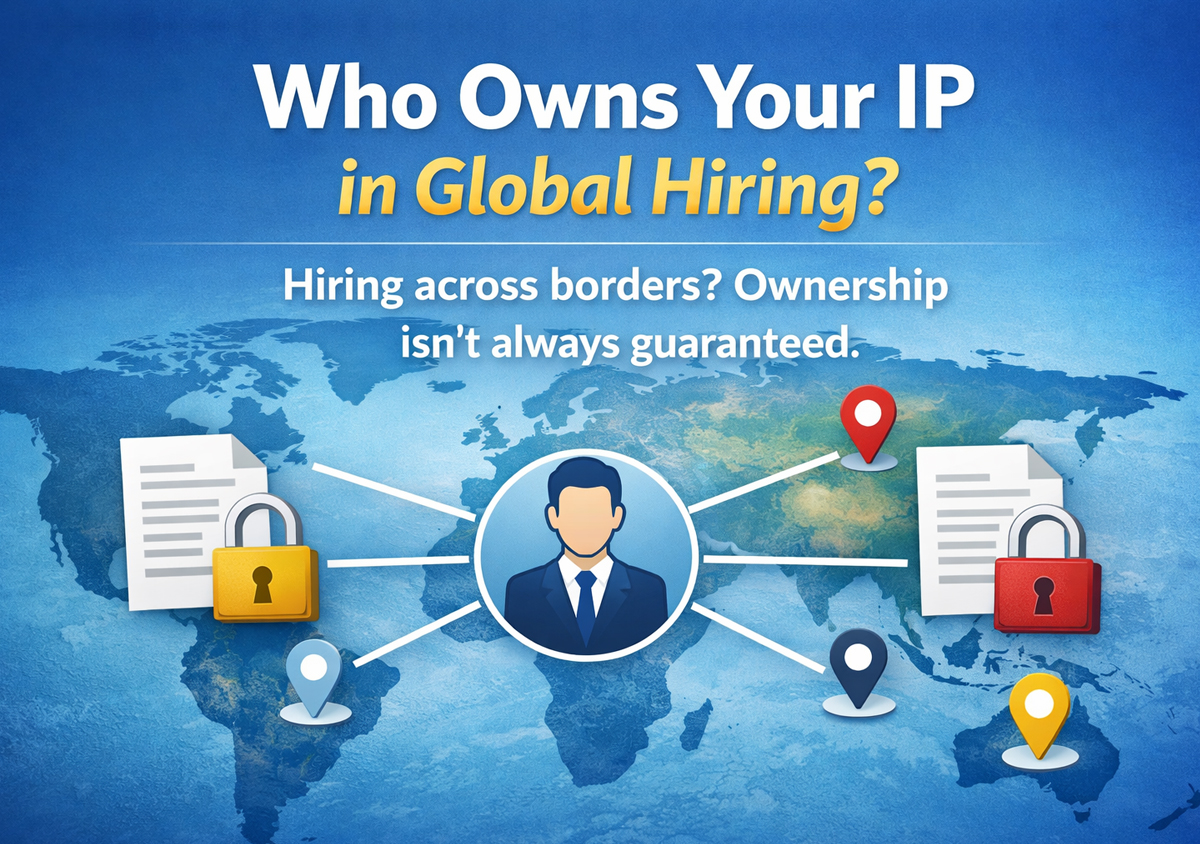
Intellectual Property Protection in International Employment Agreements

A Strategic Guide for Global Hiring

As businesses expand across borders, access to global talent becomes easier—but protecting intellectual property (IP) becomes significantly more complex.

For MSMEs and startups, IP is often their most valuable asset—whether it’s software code, proprietary processes, product designs, or business data. 
However, when employees are hired in different countries, ownership, enforcement, and legal protection of IP are no longer straightforward.

At StratEdge Global, we see many companies focus on hiring speed and cost—but overlook how global employment can expose their intellectual property.

Why IP Protection Becomes Complex in Global Hiring

In a domestic setup, employment laws and IP ownership rules are relatively predictable. 
In international hiring, they vary significantly across jurisdictions.

Key complexities include:

  • Different legal definitions of IP ownership
  • Country-specific employment and invention laws
  • Variations in the enforceability of contracts
  • Cross-border data access and security risks

In some countries, employees may retain partial rights to what they create—even when employed by a company.

Without proper structuring, businesses risk losing control over critical assets.

Key Risks MSMEs and Startups Must Understand

1. Ownership Ambiguity

In certain jurisdictions, IP created by employees does not automatically belong to the employer unless explicitly assigned.

This can lead to:

  • Disputes over ownership
  • Legal complications during funding or acquisition
  • Challenges in commercializing products

2. Weak or Non-Enforceable Contracts

Employment agreements drafted without local legal alignment may not be enforceable in foreign jurisdictions.

This increases the risk of:

Unauthorized use of proprietary information

Limited legal recourse in disputes

3. Data Access & Confidentiality Risks

Global teams often access sensitive company data remotely.

Without structured safeguards:

Confidential information may be exposed

Trade secrets can be compromised

Compliance with data protection laws may be violated

4. Jurisdictional Conflicts

If a dispute arises, determining which country’s laws apply can be complex.

This can delay resolution and increase legal costs.

What Should Be Included in International Employment Agreements

To protect intellectual property effectively, companies must ensure their contracts include:

✔ Clear IP Assignment Clauses

Explicitly state that the company owns all work created by the employee.

✔ Confidentiality & Non-Disclosure Agreements (NDAs)

Protect trade secrets, business data, and proprietary information.

✔ Jurisdiction & Governing Law Clauses

Define which country’s laws apply in case of disputes.

✔ Data Protection & Access Policies

Ensure compliance with local and international data privacy regulations.

✔ Post-Employment Restrictions

Where enforceable, include non-compete and non-solicitation clauses.

The Role of Local Compliance

A one-size-fits-all contract does not work in global hiring.

Each country has unique:

  • labor laws
  • IP ownership rules
  • enforceability standards

This makes local compliance critical.

Without aligning contracts to local regulations, companies risk having agreements that look correct—but fail in enforcement.

How StratEdge Global Helps Protect IP

At StratEdge Global, we help businesses structure international hiring with compliance and IP protection built in from the start.

We support MSMEs and startups by:

✔ Ensuring locally compliant employment contracts 
✔ Structuring clear IP ownership and assignment clauses 
✔ Managing secure payroll and employment frameworks 
✔ Aligning employment agreements with country-specific legal requirements 
✔ Reducing cross-border legal and operational risk

Our approach ensures that companies not only hire globally but also retain full control over their intellectual property.

Final Thoughts

Global hiring unlocks access to world-class talent—but it also introduces risks that are often underestimated.

Intellectual property protection is not just a legal formality—it is a strategic necessity for any company operating internationally.

For MSMEs and startups, getting this right early can prevent costly disputes, protect innovation, and support long-term growth.

As global teams become the norm, companies that prioritize structured, compliant, and secure hiring practices will be better positioned to scale confidently.

🌐 To learn more about secure and compliant global hiring, visit: 
www.stratedgeglobal.com
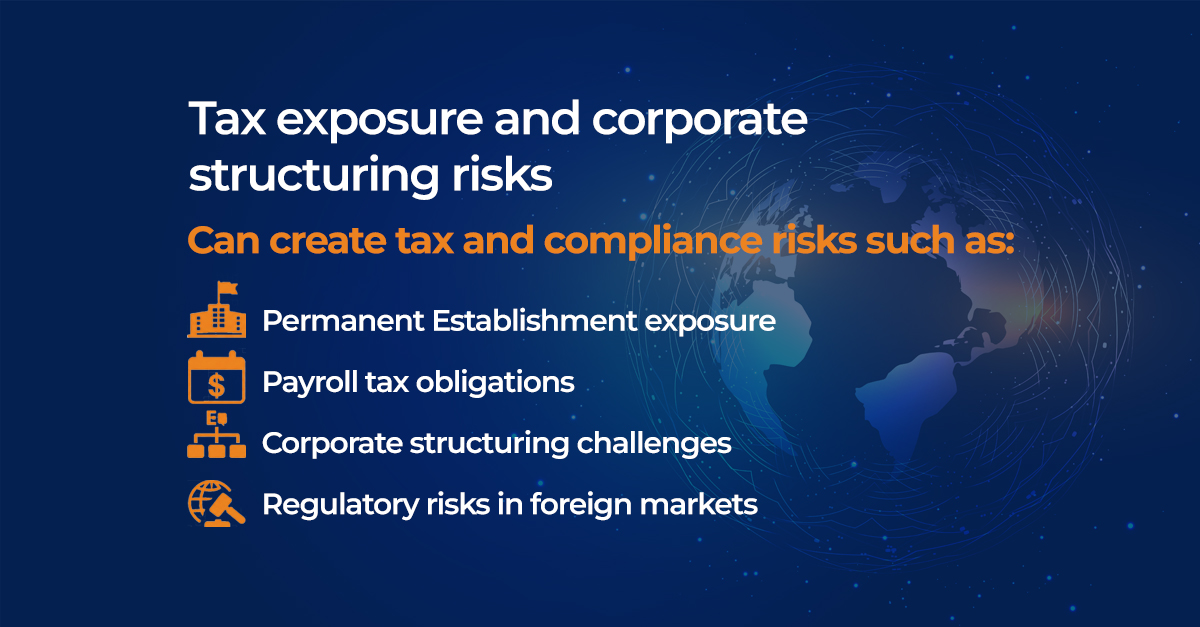
Tax Exposure and Corporate Structuring Risks in Global Expansion

A Strategic Perspective for Growing Businesses 

As businesses expand across borders, access to global talent becomes easier—but so do regulatory complexities. For MSMEs and startups entering new markets, hiring even a single employee abroad can trigger tax exposure and corporate structuring risks that are often overlooked. 

Many organizations focus on speed of hiring and operational growth, but without the right structure in place, global expansion can create long-term financial and legal consequences. 

At StratEdge Global, we work with companies navigating international hiring, compliance, and workforce structuring. One recurring challenge we see is that businesses underestimate the tax and legal implications of cross-border employment. 

This article explores the key risks and how companies can structure their global workforce more strategically.

Understanding Tax Exposure in Cross-Border Hiring

Tax exposure occurs when a company’s international operations unintentionally create tax obligations in another jurisdiction. This can happen even when the company does not formally establish a local legal entity.

The most common trigger is hiring employees or engaging in business activities in another country without understanding how local tax authorities interpret those actions.

The result can include:

  • Corporate tax obligations in a foreign jurisdiction
  • Mandatory business registration requirements
  • Payroll and employment tax liabilities
  • Retrospective tax assessments and penalties

For growing companies with limited legal infrastructure, these risks can quickly escalate.

Permanent Establishment (PE) Risk

One of the most critical concerns in global hiring is Permanent Establishment (PE).

A Permanent Establishment occurs when a company is deemed to have a taxable presence in another country due to its activities or employees there.

Several factors can trigger PE risk, including:

  • Employees negotiating or signing contracts on behalf of the company
  • Revenue-generating activities conducted locally
  • Long-term business operations in a foreign jurisdiction
  • Decision-making authority exercised from another country

Even if a company does not set up a subsidiary or branch office, the presence of certain employees can still lead authorities to determine that a permanent establishment exists.

Once PE status is triggered, the company may be required to:

  • Register a local entity
  • Pay corporate taxes in that country
  • Maintain local accounting records
  • File periodic tax returns

For MSMEs and startups, this can create unexpected operational and financial burdens.

Corporate Structuring Challenges

Corporate structuring determines how a company organizes its legal, financial, and operational presence across jurisdictions.

Without a clear structure, businesses expanding internationally may encounter issues such as:

  • Conflicting employment regulations across countries
  • Difficulty enforcing contracts and policies
  • Regulatory compliance gaps
  • Increased administrative overhead

For example, a startup that hires remote employees across multiple countries without a defined employment framework may later face complications when seeking investment, undergoing audits, or entering new markets.

Proper structuring ensures that business operations remain compliant while still supporting growth.

Payroll and Employment Tax Complexity

Every country has its own payroll compliance requirements. These may include:

  • Income tax withholding
  • Employer social security contributions
  • Mandatory employee benefits
  • Reporting and documentation obligations

Managing these obligations across jurisdictions can be particularly challenging for smaller companies with limited internal resources.

Failure to meet payroll compliance requirements can result in:

  • Financial penalties
  • Interest on unpaid taxes
  • Regulatory scrutiny
  • Employee disputes

Payroll compliance is therefore not just an operational task—it is a fundamental component of risk management.

Director and Liability Considerations

In many jurisdictions, company directors can be held personally responsible for certain tax or employment obligations.

For instance, if payroll taxes or statutory contributions are not properly remitted, local authorities may pursue directors directly.

For founders and business leaders, understanding liability exposure is essential when expanding globally.

Without proper legal structuring and compliance mechanisms, these risks may extend beyond the organisation itself.

Structuring Global Hiring the Right Way

A strategic approach to international hiring focuses on balancing growth, compliance, and operational flexibility.

Companies should evaluate:

  • The regulatory environment of the target market
  • The nature of the employee’s role and authority
  • Tax implications for both the company and the employee
  • Long-term expansion plans in the region

This evaluation allows organisations to choose an employment model that minimises risk while maintaining agility.

How StratEdge Global Supports Businesses

At StratEdge Global, we help businesses expand internationally with a structured and compliant approach.

Our services are designed to address the challenges of cross-border employment while reducing tax and regulatory exposure.

We support organisations by:

  • Assessing potential permanent establishment risks before hiring
  • Structuring international employment in line with local regulations
  • Managing compliant payroll and statutory contributions
  • Providing clarity on tax obligations and reporting requirements
  • Enabling global hiring without the immediate need for local entity setup

This approach allows companies to focus on growth while maintaining confidence in their compliance framework.

Final Thoughts

Global expansion offers tremendous opportunities for businesses—but it must be approached with careful planning.

Tax exposure and corporate structuring risks often remain hidden until regulatory reviews, financial audits, or operational challenges arise. By addressing these issues early, companies can build a sustainable foundation for international growth.

For MSMEs and startups, structured global hiring is not simply a compliance requirement—it is a strategic decision that shapes the long-term stability of the business.

Organizations planning to hire internationally should evaluate their tax exposure and corporate structure before taking the next step.

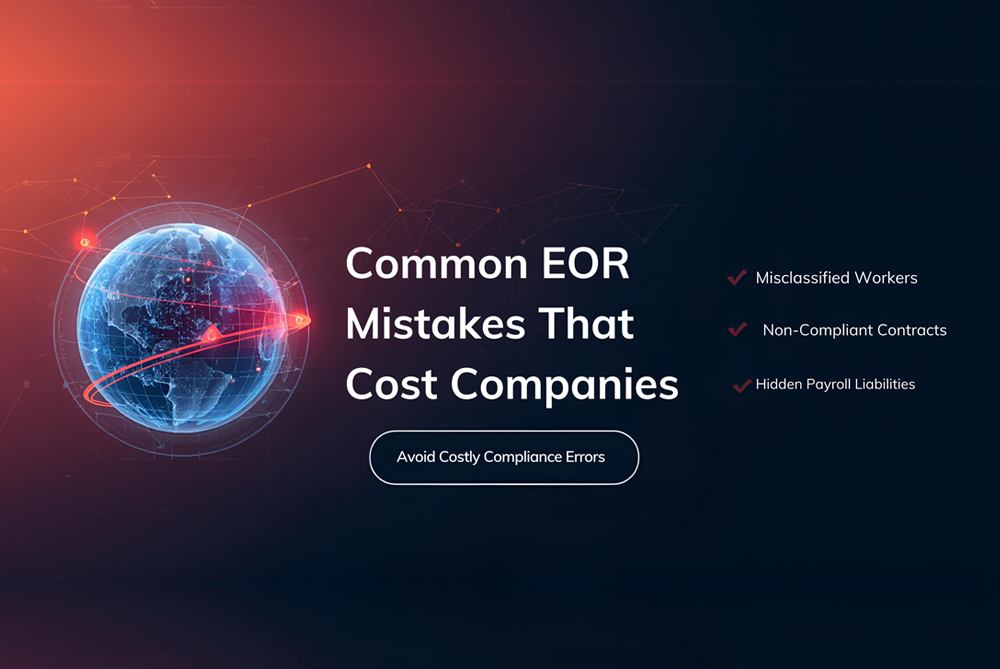
Common EOR Mistakes That Cost Companies Millions

Employer of Record (EOR) services have become a critical component of global expansion strategies. They enable organizations to hire international talent without establishing local legal entities, offering speed, flexibility, and reduced administrative overhead.

However, missteps in EOR selection or implementation can expose companies to significant financial, legal, and operational risk. Many of these risks remain hidden until regulatory scrutiny, audits, or disputes arise—often resulting in losses measured in millions.

Outlined below are the most common EOR mistakes organizations make, and why they prove so costly.

1. Viewing EOR as a Payroll-Only Function

A frequent misconception is that EOR services are limited to payroll processing. In practice, a compliant EOR must manage the full employment lifecycle, including:

  • Employment contracts aligned with local labor laws
  • Statutory benefits and social security contributions
  • Tax compliance and reporting
  • Employment law adherence
  • Termination procedures and severance obligations
  • Data protection and privacy compliance

Organizations that engage EOR providers with a narrow payroll focus often encounter non-compliant contracts or benefit structures, increasing exposure to audits, penalties, and employee claims.

Impact: Regulatory fines, legal disputes, and retroactive liabilities.

2. Underestimating Worker Classification Risk

Worker misclassification remains one of the most significant risks in global employment. This typically occurs when:

  • Independent contractors are engaged where employee status is required
  • Third-party intermediaries obscure true employment relationships
  • Local “economic substance” or control tests are not met

Regulatory authorities across jurisdictions are intensifying enforcement. When violations are identified, liability often extends retroactively and includes unpaid taxes, benefits, and penalties.

Impact: Substantial financial exposure and reputational damage.

3. Applying a Uniform EOR Model Across All Countries

Employment regulations vary widely by jurisdiction. Critical elements such as notice periods, severance requirements, working hour limits, and mandatory benefits differ substantially between countries.

Organizations that apply a standardized EOR approach without accounting for country-specific requirements risk inadvertent non-compliance.

Impact: Contract renegotiations, penalties, and potential withdrawal from markets.

4. Lack of Cost Transparency and Financial Visibility

EOR arrangements often appear straightforward at the outset, but can conceal complex cost structures, including:

  • Variable statutory contributions
  • Currency exchange markups
  • Additional fees for standard employment actions
  • Inconsistent billing practices

Without real-time visibility into employment costs, finance teams struggle with accurate forecasting and budget control.

Impact: Margin erosion, unexpected expenses, and weakened financial governance.

5. Insufficient Data Privacy and Security Controls

EOR providers handle sensitive personal and financial employee data. Inadequate data governance, weak security protocols, or non-compliance with data protection regulations such as GDPR expose organizations to serious risk.

Importantly, legal accountability often remains with the hiring company—even when breaches originate with the EOR.

Impact: Regulatory sanctions, legal exposure, and loss of employee trust.

6. Absence of a Scalability or Exit Strategy

Many organizations engage EOR services without a clear long-term plan for:

  • Scaling headcount across regions
  • Transitioning from EOR to local entities
  • Managing mergers, acquisitions, or restructurings

Poorly structured EOR agreements can limit flexibility and increase the cost and complexity of future transitions.

Impact: Delayed growth, operational inefficiencies, and missed strategic opportunities.

7. Prioritizing Speed Over Expertise

While speed to hire is often a key driver for EOR adoption, prioritizing speed without sufficient due diligence can be costly. Insufficient evaluation of an EOR’s legal expertise, compliance infrastructure, and operational maturity frequently results in downstream issues.

Replacing an EOR mid-expansion is among the most disruptive and expensive corrective actions an organization can undertake.

Impact: Operational disruption and significant remediation costs.

The Broader Cost of EOR Failures

Beyond direct financial losses, EOR-related failures impose indirect costs, including:

  • Management distraction and leadership time
  • Reduced organizational agility
  • Slower market entry
  • Damage to employer brand and employee confidence

These impacts can materially affect long-term growth trajectories.

Conclusion

EOR services can be a powerful enabler of global growth—but only when implemented with rigor, transparency, and strategic foresight.

Organizations that succeed in global hiring:

  • Treat compliance as a strategic priority
  • Demand visibility and accountability from partners
  • Select EOR providers as long-term partners, not transactional vendors

In global employment, errors rarely remain small. The cost of getting EOR wrong is not limited to financial penalties—it includes lost momentum, delayed growth, and diminished trust.

When expanding internationally, the right EOR strategy is not optional—it is foundational.